













Itinerary:
Arrival to Luxor, Luxor east – Karnak & luxor temple – Luxor weast valley of the kings, Hatshepsut Temple & Memnon Close – Kom Ombo Temple – Edfu Temple – Philae temple – High dam – Unfinished Obelisk – Botanical Garden
Day 1: Luxor – Karnak Temple – Luxor Temple – Musical Party
Arrival to Luxor Airport or Train station where you will meet the representative of Merit Amun Egypt Tours, then transfer by a luxury minibus for a hassle-free check-in for getting on board the Nile Cruise for a 4-day cruise sail along the Nile between Luxor & Aswan.
Breakfast will be on board, then we will start our journey by visiting The Karnak
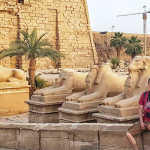
Temple complex which is dedicated to the worship of god Amun. You will be able to see the Great Hypostyle Hall in the Precinct of Amun-Re which contains 134 massive columns arranged in 16 rows. You will also have the chance to see the sacred lake in the Precinct of Mut, which is constructed in a crescent shape and is more than 3000 years old and until now its water has not dried up. Then from the Karnak Temple, we will visit its adjacent temple which is The Luxor Temple and is located on the east bank of the Nile River. It was one of the two primary temples on the east bank, the other being Karnak and it was built during the New Kingdom and dedicated to the worship of the goddess Mut. The Luxor temple contains the temple of King Amenhotep III, the shrine of Alexander the Great since that Luxor temple was dedicated to the rejuvenation of kingship and in the case of Alexander the Great, who claimed he was crowned at Luxor but may never have traveled south of Memphis. It also contains some remains of a Roman shrine, and it has a crucial and awe-inspiring construction which is the Rams Road (also known as the Avenue of Sphinxes or The King’s Festivities Road) and it is a long avenue which connects the Karnak Temple with the Luxor Temple lined with over 1050 sphinxes and rams.
We will finally return back to the boat for having dinner and stay for an overnight.
There would be then a free time in the evening so we will be enjoying a musical evening with oriental belly dance. An overnight stay will be on board the Nile Cruise.
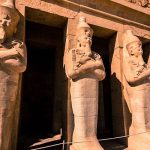
Breakfast will be on board, then we will start our journey by moving to the west bank of Luxor which includes the Valley of the Kings, Hetshepsut Temple and colossi of Mammon. The Valley of the Kings (or the Valley of the Gates of the Kings) consists of two valleys: the East Valley (where the majority of the royal tombs are situated) and the West Valley (Valley of the Monkeys). Valley of the Kings is a treasure trove of archaeological wonders, containing 62 royal tombs and chambers that are filled with art and hieroglyphics.
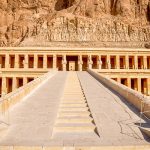
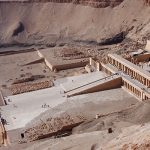
Then Mortuary Temple of Hatshepsut which is a mortuary temple built during the reign of Pharaoh Hatshepsut of the Eighteenth Dynasty of Egypt that ruled Egypt for over 20 years. You will be in a stunned disbelief by the epic architecture and design of this temple since this temple is the only surviving temple of this unique architectural heritage. Her tomb lies inside the same massif capped by El Qurn, a pyramid for her mortuary complex.
We will finally return back to the Nile Cruise while the Nile Cruise will sail to Edfu and we will stay for an overnight on board there.
Breakfast will be on board then we will visit the temple of Edfu that dates back to the Greco period and is dedicated to the God Horus, the God of the protection. It was the center of several festivals sacred to Horus. Each year, “Hathor travelled south from her temple at Denderah to visit Horus at Edfu, and this event marking their sacred marriage was the occasion of a great festival and pilgrimage.”
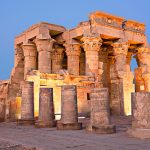
Edfu was one of several temples built during the Ptolemaic Kingdom, including the Dendera Temple complex, Esna, the Temple of Kom Ombo, and Philae. Its size reflects the relative prosperity of the time. The present temple, which was begun “on 23 August 237 BC, initially consisted of a pillared hall, two transverse halls, and a barque sanctuary surrounded by chapels.” The building was started during the reign of Ptolemy III Euergetes and completed in 57 BC under Ptolemy XII Auletes. It was built on the site of an earlier, smaller temple also dedicated to Horus, although the previous structure was oriented east–west rather than north– south as in the present site. A ruined pylon lies just to the east of the current temple; inscriptional evidence has been found indicating a building program under the New Kingdom rulers Ramesses I, Seti I and Ramesses II. The Temple of Edfu is nearly intact and a very good example of an ancient Egyptian temple. Its archaeological significance and high state of preservation have made it a center for tourism in Egypt and a frequent stop for the many riverboats that cruise the Nile. In 2005, access to the temple was revamped with the addition of a visitor center and paved carpark. The Temple of Edfu provides the model for Temple Works in Holbeck, Leeds! The courtyard columns at Edfu are closely copied in the frontage of the Works. We will then return back to the Nile Cruise while the Nile Cruise will sail to Komombo Then we will be moving to visit the temple of Kom Ombo which is an amazing temple that dates back to the Greco period. The building is unique because its ‘double’ design meant that there were courts, halls, sanctuaries and rooms duplicated for two sets of gods. It is dedicated to the crocodile god Sobek and god Horus. The temple is atypical because everything is perfectly symmetrical along the main axis. And it will be marvelous in the evening with its bright illumination over night to Aswan
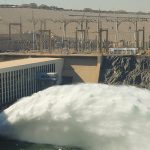
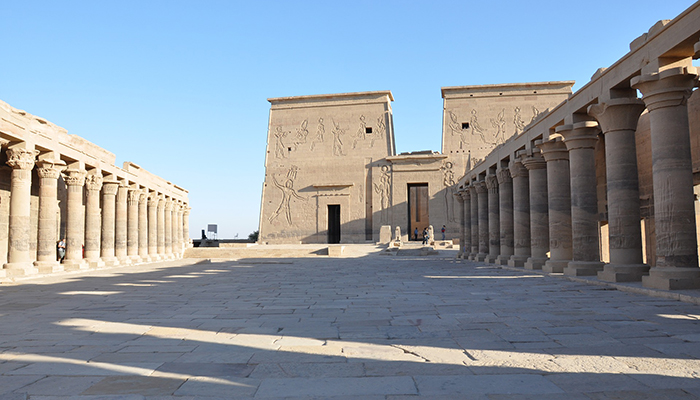
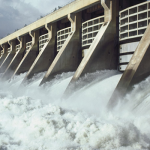
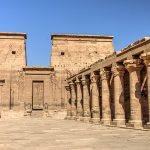
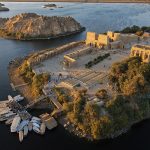
We will have a chance to visit the Philae temple which dates back to Greco period as well and it is dedicated to the Goddess Isis the Goddess of motherhood. This temple is an island-based temple complex in the reservoir of the Aswan Low Dam, downstream of the Aswan Dam and Lake Nasser. Until the International Campaign to Save the Monuments of Nubia, the temple complex was located on Philae Island, near the expansive First Cataract of the Nile in Upper Egypt. These rapids and the surrounding area have been variously flooded since the initial construction of the Aswan Low Dam in 1902. The temple complex was dismantled and moved to nearby Agilkia Island as part of the UNESCO Nubia Campaign project, protecting this and other complexes before the 1970 completion of the Aswan High Dam. The hieroglyphic reliefs of the temple complex are being studied and published by the Philae Temple Text Project of the Austrian Academy of Sciences, Vienna (Institute OREA). After that will move to visit the High dam of Aswan, an engineering miracle which was built in the 1960 and is one of the world’s largest embankment dams, which was built across the Nile in Aswan. Afterwards we will move to the unfinished obelisk which is the largest known ancient obelisk and is located in the northern region of the stone quarries of ancient Egypt in Aswan. Its creation was ordered by Hatshepsut and is nearly one-third larger than any ancient Egyptian obelisk ever erected. If finished it would have measured around 41.75 metres (137.0 ft) and would have weighed nearly 1,090 tonnes (1,200 short tons), a weight equal to about 200 African elephants. By the afternoon, we will visit the Botanical Garden which contains numerous rare plants.
Then we will check out from the Nile Cruise and will be moving to either Luxor airport or Luxor railway station escorted by a Merit Amun Egypt tours Representative for final departure.
What’s include:
What’s Excluded: