


















Itinerary:
Day 1: Arrival to Cairo – Cairo Hotel
Arrival to Cairo Airport, meeting the representative of Merit Amun Egypt Tours, then transfer by a luxury minibus for a hassle-free check-in to the hotel. Dinner will be at the hotel, and then we will stay for an overnight there.
Day 2: Giza Pyramids – Egyptian Museum – Khan El-Khalili
Breakfast will be at the hotel, The tour begins with a visit to the Pyramids of Giza, which is one of the seven ancient wonders of the world until now and the tour guide will begin with a meticulous explanation about the Great Pyramid of King Cheops “Khufu” which is the biggest Egyptian pyramid and the tomb of Fourth Dynasty pharaoh Khufu. Initially standing at 146.6 metres (481 feet), the Great Pyramid was the tallest man-made structure in the world for more than 3,800 years. Over time, most of the smooth white limestone casing was removed, which lowered the pyramid’s height to the present 138.5 metres (454.4 ft). What is seen today is the underlying core structure. Then we go to the middle pyramid of King Khafre “Chephren” which is the middle of the three Ancient Egyptian Pyramids of Giza, the second tallest and second largest of the group. It is the tomb of the Fourth-Dynasty pharaoh Khafre (Chefren), who ruled c. 2558−2532 BC and has a base length of 215.5 m (706 ft) and rises up to a height of 136.4 metres (448 ft). It is made of limestone blocks weighing more than 2 tons each. And then we go to the smaller pyramid of King Menkaure “Mykerinus” which is the smallest of the three main pyramids of the Giza pyramid complex, located on the Giza Plateau in the southwestern outskirts of Cairo.
It is thought to have been built to serve as the tomb of the Fourth Dynasty Egyptian Pharaoh Menkaure. Menkaure’s pyramid had an original height of 65.5 meters (215 ft), and was the smallest of the three major pyramids at the Giza Necropolis. It now stands at 61 m (200 ft) tall with a base of 108.5 m (356 ft).
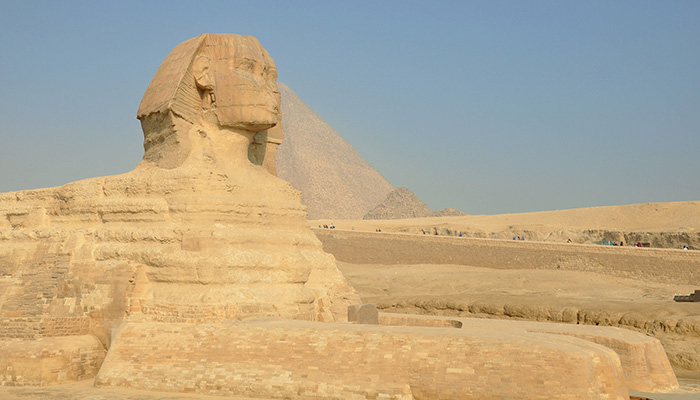
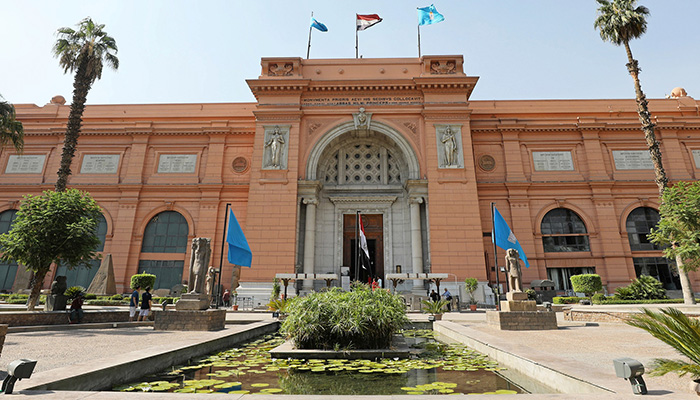
We would also have the opportunity to see the famous sphinx (or The Great Sphinx of Giza) which is a limestone statue of a reclining sphinx, a mythical creature with the head of a human, and the body of a lion. The Sphinx is the oldest known monumental sculpture in Egypt and one of the most recognizable statues in the world. Then we are up to the Egyptian Museum in Cairo (EMC) which is the oldest archaeological museum in the Middle East, housing over 170,000 artifacts. It has the largest collection of Pharaonic antiquities in the world.
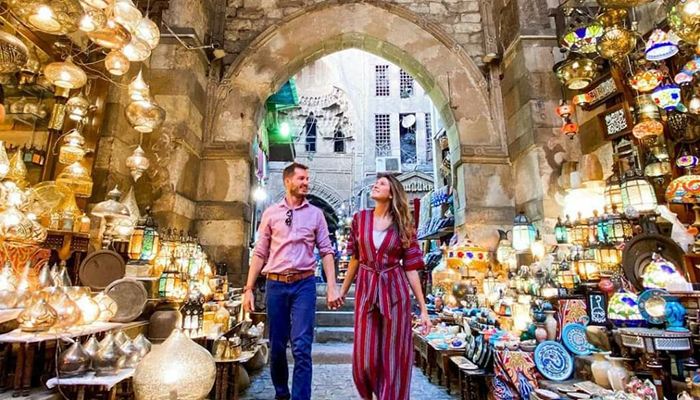
We will then have another special tour, food tour! By having a beautiful Egyptian lunch, trying the Egyptian cuisine and living in the Egyptian atmosphere while eating. Afterwards we will be heading to a guided tour in Khan el-Khalili, one of the biggest and oldest bazaars in the Middle East and Africa. It was established as a center of trade in the Mamluk era in the 14th century.
And in the present day, it is home to many Egyptian artisans and workshops involved in the production of traditional crafts and souvenirs. Finally we will return back from our tour where we will have dinner at the hotel, and then we will stay for an overnight there.
Day 3: Old Cairo – Citadel – Fayium
Breakfast will be at the hotel, then we will be moving to a full day sightseeing starting from Old Cairo which is full of religious complexes which includes The Amr ibn al-As Mosque which is a historic mosque in Old Cairo that was built in 641–642. it served as the center of the newly founded Muslim capital of Egypt, Fustat. The original structure was the first mosque ever built in Egypt and the whole of Africa. For 600 years, the mosque was also an important center of Islamic learning until Al-Muizz’s Al-Azhar Mosque in Islamic Cairo replaced it. Through the twentieth century, it was the fourth largest mosque in the Islamic world. The location for the mosque was the site of the tent of the commander of the Muslim army, general Amr ibn al As.
One corner of the mosque contains the tomb of his son, ‘Abd Allah ibn ‘Amr ibn al-‘As. Due to extensive reconstruction over the centuries nothing of the original building remains, but the rebuilt Mosque is a prominent landmark and can be seen in what today is known as Old Cairo.
It is an active mosque with a devout congregation, and when prayers are not taking place, it is also open to visitors and tourists.
the Muslim army, general Amr ibn al-As.
One corner of the mosque contains the tomb of his son, ‘Abd Allah ibn ‘Amr ibn al-‘As. Due to extensive reconstruction over the centuries nothing of the original building remains, but the rebuilt Mosque is a prominent landmark and can be seen in what today is known as Old Cairo. It is an active mosque with a devout congregation, and when prayers are not taking place, it is also open to visitors and tourists. We will then visit the imposing Citadel of Saladin and the Alabaster Mosque. The citadel was built in the 12th-13th centuries, during the time of the Crusades, and later served as a residence for the Mamluk sultans and the Ottoman pashas. The Alabaster Mosque is one of the largest and most magnificent mosques in Cairo.
Situated on the summit of the citadel, this Ottoman mosque, the largest to be built in the first half of the 19th century, is, with its animated silhouette and twin minarets, the most visible mosque in Cairo. Muhammad Ali chose to build his state mosque entirely in the architectural style of his former overlords, the Ottomans, unlike the Mamluks who, despite their political submission to the Ottomans, stuck to the architectural styles of the previous Mamluk dynasties.
Afterwards we will be heading to El-Fayium and once we arrive, we will check- in to the hotel, we will be having our dinner and overnight there.
Day 4: Fayium – Valley of Whales – Magic Lake
Breakfast will be at the hotel, then we will start our adventure with a tour to Wadi El- Rayan Protected Area. Wadi El-Rayan is a natural depression in the western desert of Egypt, 42m below the sea level. It consists of two lakes connected by Egypt’s only waterfall. It was designated as a Protected Area in 1989 to protect the area’s biological, geological and cultural resources. The Protected Area covers 1759 km² in the southern part of El-Fayoum. The waterfalls are one of the best known attractions in Wadi El- Rayan Protected Area. The area conserves large expanses of desert containing a variety of landscapes and formations. Rare and fascinating wild life is found in the desert of Wadi El- Rayan along with fossils of creatures of past epochs and cultural heritage sites from ancient civilizations.
Then we are definitely up to the Valley of the Whales, which is a paleontological site in El-Fayium. It was designated a UNESCO World Heritage Site in July 2005 for its hundreds of fossils of some of the earliest forms of whale, the archaeoceti (a now extinct sub-order of whales). The site reveals evidence for the explanation of one of the greatest mysteries of the evolution of whales: the emergence of the whale as an ocean-going mammal from a previous life as a land-based animal. No other place in the world yields the number, concentration and quality of such fossils, nor their accessibility and setting in an attractive and protected landscape. The fossils found at the site may not be the oldest but their great concentration in the area and the degree of their preservation is such that even some stomach contents are intact.
The presence of fossils of other early animals such as sharks, crocodiles, sawfish, turtles and rays found at the valley makes it possible to reconstruct the surrounding environmental and ecological conditions of the time, adding to its justification to be cited as a Heritage site.
The fossils of whales vary from single bones to entire skeletons, and a number of partial skeletons are currently on display in the public part of the park. The two common whales are the large Basilosaurus, and the smaller (3- to 5-metre) Dorudon. At least two other species are known from rarer remains.
Afterwards we will visit the Magic Lake enjoy its magical view and where we can also swim in. It’s considered to be one of the most beautiful lakes in Egypt. Our dinner will be a tasty Barbecue party and we will finally return to the hotel and stay an overnight there.
Day 5: Tunisia Village – Cairo
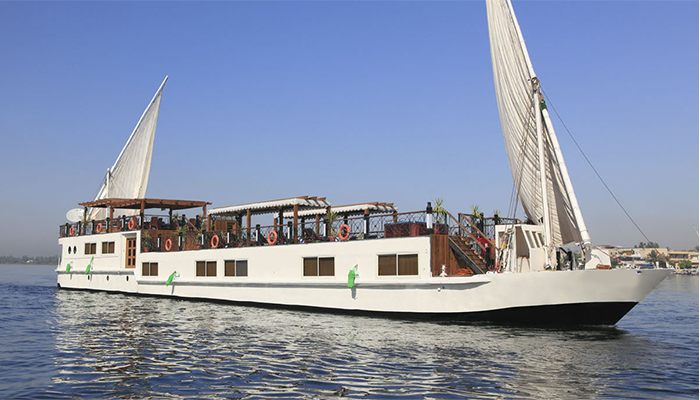
Breakfast will be at the hotel, Then we will go and take a walk to the village of Tunis to visit the many ceramic workshops. You will get an insight into the impressive craftsmanship and can buy unforgettable souvenirs from there. The village overlooks a stunning view of the edge of the desert on the other side of the lake. It is one of the most beautiful places in Egypt. Afterwards we will check out from the hotel and will be moving to Cairo Airport where we will have a domestic flight to Luxor. Once we arrive to Luxor, we will be meeting the representative of Merit Amun Egypt Tours there, then we will be transferred by a luxury minibus for a hassle-free check-in to Luxor West Bank aboard the Nile Dahabiya Boat for a 10-day cruise sail along the Nile between Luxor and Aswan, dinner will be on board, and then we will stay for an overnight aboard the Nile Dahabiya Boat.
Day 6: Karnak Temple – Esna
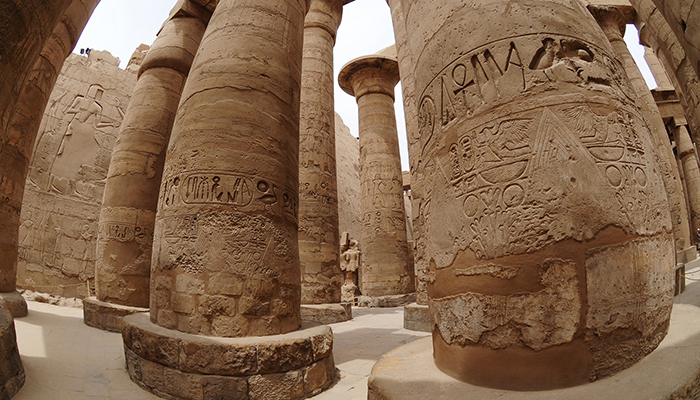
Breakfast will be on board, then we will start our journey by visiting The Karnak Temple complex which is dedicated to the worship of god Amun. You will be able to see the Great Hypostyle Hall in the Precinct of Amun-Re which contains 134 massive columns arranged in 16 rows. You will also have the chance to see the sacred lake in the Precinct of Mut, which is constructed in a crescent shape and is more than 3000 years old and until now its water has not dried up.
We will finally return back to the boat for having dinner while the boat will be sailing to Esna and we will stay for an overnight near El Hagz island.
Day 7: Al Hegz Island – El Cab Village – Edfu – Al Fawza Island
Breakfast on board, then we will be moving to take a walk on Al Hegz Island where we will be having a walking tour and enjoy the marvelous natural sights there and it will show us the daily life of the Egyptian countryside. We will be having lunch on board the boat while the boat continues sailing to El Cab Village which is a place full of noble tombs from the old and new kingdom. We will then return to the boat for having dinner while it will continue sailing to Edfu. We will stay for an overnight near Al Fawza Island.
Day 8: Gebel El-Silsila
Breakfast will be on board, then we will have a visit to Gebel el-Silsila and explore the ancient sandstone quarries and rock-cut chapels of Horemheb, Seti I, Ramesses II and Merenptah. During the 18th Dynasty the Egyptians switched from limestone to sandstone. At this time the quarries at Gebelein were not yielding as much limestone as before. Gebel el-Silsila became a source of sandstone. The use of this stone allowed for the use of larger architraves. The site provided numerous stone quarries on both the west and east sides of the Nile. The site contains many shrines erected by officials who would have been in charge of quarrying the stone. Almost all of Ancient Egypt’s great temples derived their sandstone from here, such as Karnak, Luxor, Ramesses III’s Medinet Habu, Kom Ombo, and the Ramesseum.
We will return to have lunch on board the boat while the boat continues sailing to Kom Ombo. However during our trip to Kom Ombo, we will stop in a nearby island to take a rest at one of the Coffee Shops there, Gabanna Coffee Shop, and you can take the opportunity and swim in the Nile as well. Then we will return to the boat for having dinner while it will continue sailing to Kom Ombo. Then we will overnight on board the boat.
Day 9: Kom Ombo – Daraw – Aswan – Botanical Garden – Nubian Village
Breakfast will be on board, then we will go to the city of Daraw where we will visit the oldest animal market in Egypt there, where among other animals, camels are bred in Sudan and are sold in large numbers. Afterwards, we will return back to the boat for having lunch while the boat will continue sailing to Aswan. Once we arrive, we will visit the Botanical Garden which contains numerous rare plants and then the Nubian village which is a marvelous village that will be showing us the daily life of the Nubian people. We will finally return back to the boat for having dinner and stay for an overnight.
Day 10: Aswan – Philae temple – High dam – Unfinished Obelisk
Breakfast will be on board, then we will have a chance to visit the Philae temple which dates back to Greco period as well and it is dedicated to the Goddess Isis the Goddess of motherhood. This temple is an island-based temple complex in the reservoir of the Aswan Low Dam, downstream of the Aswan Dam and Lake Nasser. After that will move to visit the High dam of Aswan, an engineering miracle which was built in the 1960 and is one of the world’s largest embankment dams, which was built across the Nile in Aswan. Afterwards we will move to the unfinished obelisk which is the largest known ancient obelisk and is located in the northern region of the stone quarries of ancient Egypt in Aswan. Its creation was ordered by Hatshepsut and is nearly one-third larger than any ancient Egyptian obelisk ever erected. If finished it would have measured around 41.75 metres (137.0 ft) and would have weighed nearly 1,090 tonnes (1,200 short tons), a weight equal to about 200 African elephants. We will finally return back to boat for having lunch and dinner and we will overnight on board. There would be a free time in the evening so there is an optional tour where we can visit the light and sound show of the Philae temple where you go to a journey in the past, in the Ancient Egypt’s era, learn about the pharaohs and the gods they served during the Sound and Light Show, a nighttime audiovisual experience that shows the Philae Temple from a different perspective. The focus here is on bringing the temple to life through atmospheric lighting and sound effects, letting the sheer scale and historical significance of the structure shine through with a little extra drama. The pharaohs who built parts of the temple complex talk to you as you pass through the site, detailing their accomplishments, beliefs and the royal way of life they enjoyed some 3,000 years ago, you will definitely have some very enjoyable time there.
Day 11: Abu Simbel temple (optional tour)
Breakfast will be on board boat, then there’s an optional tour to the Temple of Abu Simbel which is a ravishing temple that dates back to the new kingdom of the 19th dynasty for the king Ramses II or (Ramses the Great) and is comprising two massive rock-cut temples in the village of Abu Simbel. It is situated on the western bank of Lake Nasser, about 230 km (140 mi) southwest of Aswan.
Those who will decide to stay in Aswan, they can spend a relaxing and charming day aboard the Nile Dahabiya boat. After returning back from Abu Simbel, we will be having dinner while the boat will be sailing to Luxor and stay for an overnight on board.
Day 12: Arrival to Luxor – Luxor Temple – Luxor Market
Breakfast will be on board, then from the Karnak Temple, we will visit its adjacent temple which is The Luxor Temple and is located on the east bank of the Nile River. It was one of the two primary temples on the east bank, the other being Karnak and it was built during the New Kingdom and dedicated to the worship of the goddess Mut.
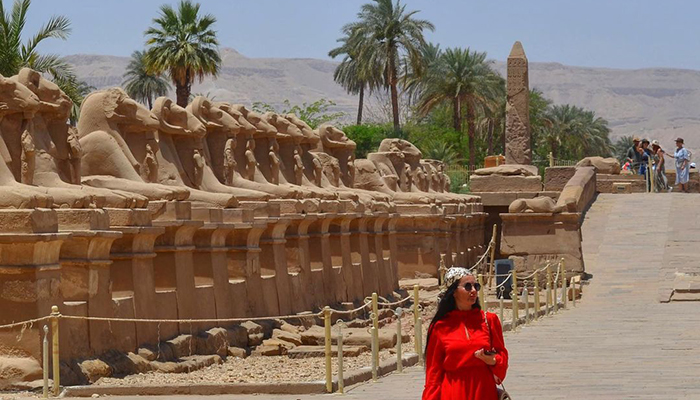
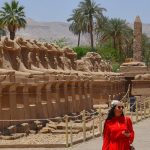
The Luxor temple contains the temple of King Amenhotep III, the shrine of Alexander the Great since that Luxor temple was dedicated to the rejuvenation of kingship and in the case of Alexander the Great, who claimed he was crowned at Luxor but may never have traveled south of Memphis. It also contains some remains of a Roman shrine, and it has a crucial and awe-inspiring construction which is the Rams Road (also known as the Avenue of Sphinxes or The King’s Festivities Road) and it is a long avenue which connects the Karnak Temple with the Luxor Temple lined with over 1050 sphinxes and rams. There will be also a city tour to explore the epic sights of Luxor and afterwards we will visit the market of Luxor. We will finally return back to the boat for having dinner and stay for an overnight.
Day 13: Luxor – West Bank – Nobles City – Musical Party
Breakfast will be on board. Ready for a new adventure to start your day with? There will be an optional tour for the newest, safest and most comfortable hot air balloon ride in Luxor! You will enjoy stunning aerial views and the sun rise view over the iconic Nile-side city from an unbeatable vantage point – the sky – where you can see these fascinating natural sights of wide green areas of fields, the Nile River and the Egyptian monumental sights and temples. It also gives you a chance to take marvelous photographs from this epic adventure.
Then we will be moving to the west bank of Luxor which includes the Valley of the Kings, Hetshepsut Temple and colossi of Mammon. The Valley of the Kings (or the Valley of the Gates of the Kings) consists of two valleys: the East Valley (where the majority of the royal tombs are situated) and the West Valley (Valley of the Monkeys). Valley of the Kings is a treasure trove of archaeological wonders, containing 62 royal tombs and chambers that are filled with art and hieroglyphics.
Afterwards the Colossi of Memnon which are two massive stone statues of the Pharaoh Amenhotep III, which stand at the front of the ruined Mortuary Temple of Amenhotep III.
These massive fascinating statues contain 107 Roman-era inscriptions in Greek and Latin! Then we are up to the Nobles City (Or The Tombs of the Nobles) which will make an interesting visit among the rest of the West Bank sites precisely because they break this trend. Located between the Ramesseum and Hatshepsut’s Temple, these clusters of tombs carved into a rocky hillside are all dedicated to administrators, governors, and other figures of minor nobility. In these tombs you will find more humble depictions of everyday life and the jobs that these functionaries fulfilled. The real-life depictions of nature and everyday concerns are refreshing and provide a bit more insight into what ancient Egypt might actually have been like. There would be a free time in the evening so we will be having dinner on board the boat while enjoying a musical evening with oriental belly dance. An overnight stay will be on board the Nile Dahabiya boat.
Day 14: Final Departure – Luxor airport
Breakfast will be on board, then we will be moving to Luxor airport escorted by a Merit Amun Egypt tours Representative for final departure.
What’s include:
What’s Excluded: